
Every property manager in Western North Carolina eventually has the same conversation. The bank behind the building, the embankment along the road, the acre between the solar rows — it gets mowed for a few years, then it gets skipped, then it gets tall enough that nobody wants to be the one who walks up there with a string trimmer. The work doesn't disappear. It just stops being done.
Here's how to tell where your slope sits, what the equipment on your property is actually rated for, and where the honest limit is.
Start with the number
Slope gets described three ways and they are not interchangeable. Degrees are the angle off level. Percent grade is rise over run times 100, which is why it looks so much bigger. Ratio is run to rise — the "2:1 slope" language you hear on road plans. A 45-degree slope is a 100% grade; a 2:1 slope is about 27 degrees.
- 15° = 27% grade = roughly 3.7:1 — the published limit for most zero-turn mowers
- 20° = 36% grade — comfortable for a compact tractor, not for a zero-turn
- 27° = 50% grade = 2:1 — the shoulder of a highway cut, and where tracked slope equipment starts earning its keep
- 33° = 65% grade = 1.5:1 — hand work or a remote machine, nothing you sit on
- 45° = 100% grade = 1:1 — skid steer country, and beyond it, rope work
- 50° = 119% grade — the top of a REAPER's published rating
You don't need a survey crew to get close. Stand at the toe of the slope and hold a phone level against a 4-foot straightedge laid on the ground; the angle reading is within a degree or two of the real number. If you only want a ballpark, walk it: if you have to lean into the hill to stay upright, you're past 20 degrees, and that's where the conversation changes.
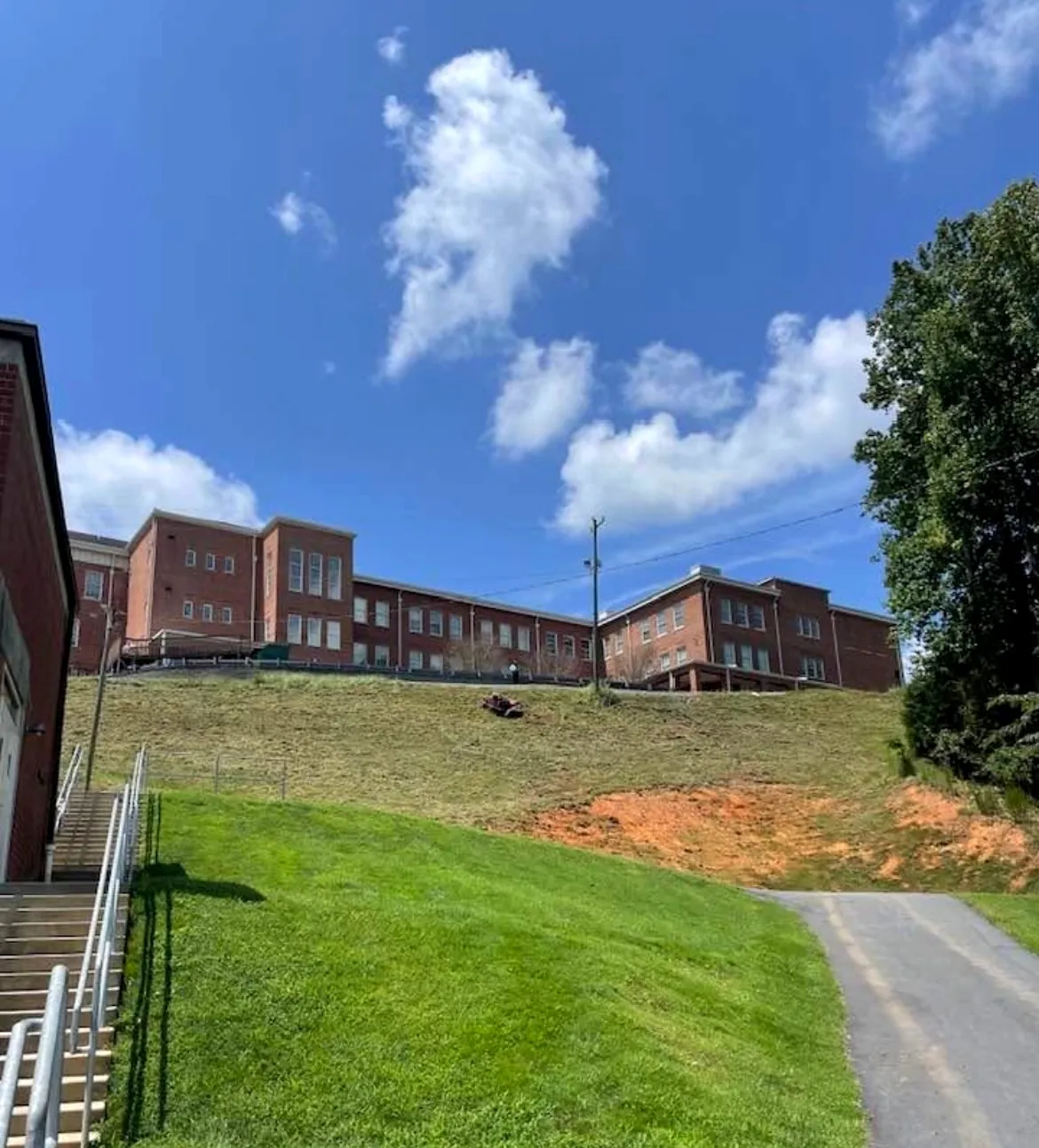
What turf equipment is actually rated for
Most zero-turn manufacturers publish a maximum slope around 15 degrees, and some stretch to 20. Read the fine print on those ratings: they assume dry turf, good tires, a straight up-and-down pass, no attachments, and an operator who never turns across the face of the hill. Turning on a slope is what takes a zero-turn over — the inside wheel unloads, the machine pivots on the outside tire, and gravity finishes the argument.
The published number is also a best case. Once the fescue is wet, once the tires are worn, once there's a dew or a heavy thatch layer, the real limit drops several degrees. A crew that has been mowing a 20-degree bank for years without incident isn't proving the machine can do it. They're proving nobody has been unlucky yet.
The slope doesn't care how experienced the operator is. It only cares about the angle and the grip.
Three ways it goes wrong
- Rollover. No ROPS and no seatbelt on a slope is the version that ends a career, or worse. This is the one that shows up in insurance renewals and in the story the crew tells for the rest of their lives.
- Turf and erosion damage. A zero-turn spinning on a wet bank strips the crown off in a single pass. You trade tall grass for a rut that becomes a gully the next time it rains.
- Work that quietly leaves the scope. Somebody writes "mow all turf areas" into the contract, somebody else decides the bank is excluded, and the property ends up with a fifteen-foot strip of unmaintained vegetation and no paper trail explaining why.
The honest limit
A tracked remote mower rated to 50 degrees is not permission to mow everything under 50 degrees. Wet clay is a different surface than dry clay. Loose fill on a new cut bank will slide no matter what's on it. Rock outcrops, spring seeps, and a slope that ends at a retaining wall or a creek all change the answer, because the question isn't just "can the machine climb it" but "where does it end up if it doesn't."
We turn down work for that reason, and we'd rather say no on the phone than find out on the hill. The properties that get a yes are usually steep, open, and accessible — the kind of bank a crew has been avoiding for three seasons.
How a slope gets read before it gets quoted
- The grade at the steepest cross-slope, not the average fall line. The worst five feet is what decides the method.
- Access. Gate width, overhead wires, culverts, and whether a trailer can turn around without backing down a driveway.
- What's growing and how tall it is. Six-inch turf is a mowing job; six-foot fescue with briar is a clearing job with a different pass count.
- Obstacles. Guy wires, hydrants, headwalls, irrigation heads, monuments, and the one fence post nobody mentioned.
- Run-out. If the machine loses traction at the top, what's at the bottom?
- Ground conditions. Springs, seeps, and the red clay that stays slick for two days after rain.
That read takes about twenty minutes on site, and it's free. If you're looking at a bank you've been avoiding since spring, request a site assessment and we'll tell you straight whether it's a mowing job, a clearing job, or a no.
Written by
Blue Ridge Slope Goat · State Road, North Carolina
We run remote-controlled REAPER mowers on the banks, ditches, and overgrown hillsides crews shouldn't walk. Fully insured, working across Western North Carolina.